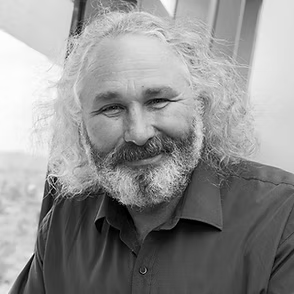
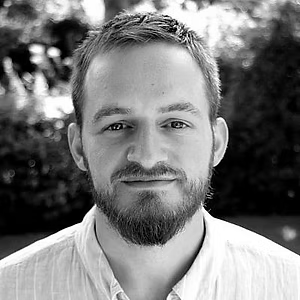
Dr Brad Marshall
Chief Research Officer Ctrl+Shft B.A.Psych; MHSc.Beh Sci; MRes; PhD
Academic Affiliations
Adjunct Fellow, Macquarie University School of Psychological Sciences
Research Interests
- Healthy use of Digital Technology
- Computer Gaming Addiction
- Smartphone Addiction
- Developmental and Psychological Impacts
Bio
Dr Brad Marshall (AKA The Unplugged Psychologist) is recognised as one of Australia’s leading experts in excessive internet and screen use otherwise known as Internet Addiction or Gaming Disorder. As the Director of The Screen & Gaming Disorder Clinic; Australia’s first established specialty clinic, he is a well-respected presenter and speaker on the topic, frequenting schools, health, and corporate organisations around Australia.
He is the author of three best-selling international books that have been published in over a dozen languages and 30 countries world-wide. In his spare time Brad conducts research with world leading academics at Macquarie University and published Australia’s first ever clinical treatment trials for smartphone addiction and gaming disorder. Brad is an Adjunct Fellow at the School of Psychological Sciences, Macquarie University.
Professor Wayne Warburton
BPsych Hons (1); PhD; GAICD; MAPS
Academic Affiliations
Professor, Macquarie University School of Psychological Sciences
Research Interests
- Impacts of digital media content on children and young adults
- Video Gaming and Screen Disorders
- Aggressive behaviour
Bio
Dr Wayne Warburton is a Professor of Developmental Psychology at Macquarie University Australia, and also a registered psychologist. His research centres on issues related to aggressive behaviour, impacts of media content (including violent, sexualised and body-image referent media), and problematic and disordered screen use. He is co-author of the books Growing Up Fast and Furious and The Importance of Media Literacy, and of several statements by international panels of experts on topics around media violence, youth violence and the impacts of sexualised media.
His work and his RES@T-A Australia program for teenagers with a screen disorder were the subject of a touching Australian Story on the ABC that followed two wonderful teen boys through the intervention program (March 6, 2023; https://iview.abc.net.au/video/NC2302Q002S00). A weekend intervention program for families with a child who has a serious screen disorder, developed with Dr Brad Marshall, featured on Channel Seven's Spotlight in May, 2024 (https://7plus.com.au/7news-spotlight?utm_source=7NEWS&utm_medium=promo-tile&utm_campaign=spotlight-show-page).
Wayne has won more than 25 awards for his scholarship and teaching, including four from the Australian Psychological Society, and the 2018 Distinguished Scientific Contribution to Media Psychology and Technology Award from the American Psychological Association.
Wayne is passionate about research which can be used for social benefit, and communicating that research to parents, policymakers and professionals who work with children and teens.
Dr Michoel Moshel
Clinical Neuropsychologist Registrar BSci(Hons), MPsych(ClinNeuro), PhD candidate
Academic Affiliations
Coming Soon
Research Interests
- Problematic and Harmful Screen Use
- Cognitive Development and Neuropsychological Impacts
- Adolescent Vulnerability to Digital Design
- AI-Generated Media and Emerging Tech Risks
Bio
Dr Michoel Moshel is one of Australia’s leading researchers in the neuropsychological impacts of harmful screen use, and among a small global cohort investigating how digital technologies affect cognitive functioning. His work has been published internationally and featured across major media platforms, including ABC News, Fox News, Cosmos, The Independent, and The Conversation.
He has contributed to both national and international research initiatives, including studies on problematic gaming, attention, and emerging tech such as AI-generated media. Alongside his research, Michoel works clinically as a neuropsychologist in the fields of brain injury and paediatrics.
A regular voice in public discussions on digital wellbeing, Michoel advocates for better digital literacy, policy reform, and healthier technology use.